
Room 1
HARBOUR
3rd class
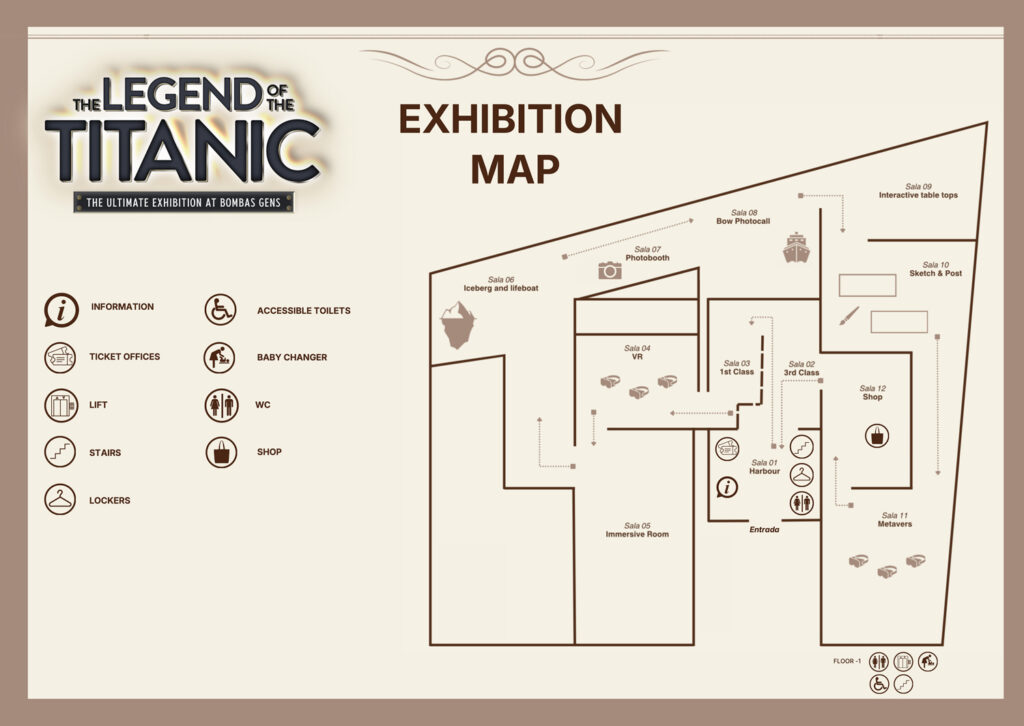
On April 10th, 1912, Arthur Callahan and his daughter Elizabeth board the Titanic in the port of Southampton.
Join them on a trip you won’t forget.
Together they intend to sail to the United States of America to reunite with Elizabeth’s mother and Arthur’s wife, Cassidy Callahan, who arrived in New York a few months earlier, fleeing unhealthy and precarious working conditions in the factories of England.
There, Mrs Callahan has tried to smooth the difficult path for her family so that they can start a new life.
Find out what Arthur and Elizabeth’s journey is like as passengers on the Titanic’s third-class; the only ticket they have been able to afford to buy with their limited resources.
They begin a journey where fate and luck carry more weight than they ever imagined… and one they will never forget.
Shipping spirit of the time
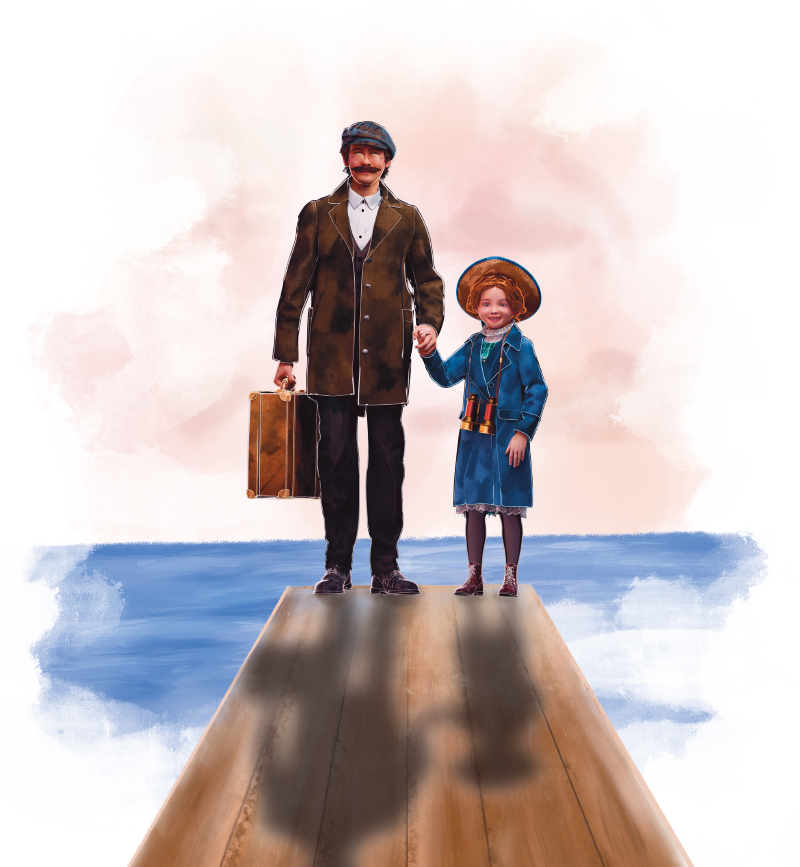
The consequences of the Napoleonic wars in Europe were disastrous. In the 19th century, poverty ravaged the entire European continent, forcing millions of people to flee their countries and seek opportunities in the United States, the new promised land. In the absence of ships exclusively for passenger traffic, the high demand for ships to cross the Atlantic led the major shipping lines to seek out new formulas.
It was not until 1839 that ships used exclusively for passenger transport began to be built. Three different ticket fares were established: first, second and third class. Shipping lines began to compete for routes and ships began to grow in size, luxury and speed.
This increase in ship size, however, was not matched in profitability as wealthier people only travelled at certain times of the year. The rest of the time, the ships served mainly third-class emigrants.
As the costs were not covered, the need arose to increase the size of passenger ships even further.
THE WHITE STAR LINE
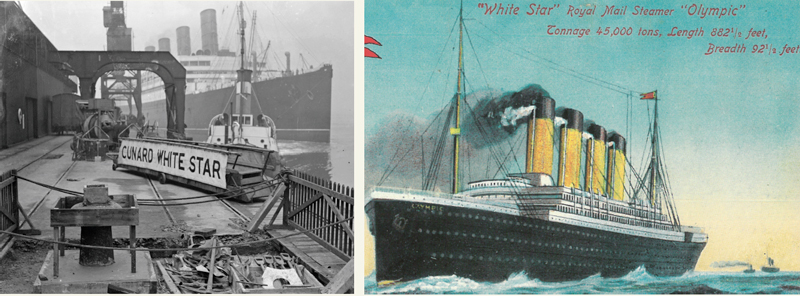
The first of the three ships, the Olympic, entered service in 1911.
Soon after, following construction lasting over 3 years with more than 15,000 carpenters and engineers, the Titanic was ready to sail in April 1912.
The total cost was $7.5 million ($200 million in today’s dollars). Despite the changes and technical advances, the Titanic reached a top speed of 24 knots (44.5 km/h).
Their entry into service was a major blow to the White Star Line.
- Bruce Ismay, son of the original founder, took up the challenge and in March 1907 proposed building a new series of ships that would surpass those of his competitors in size, luxury and speed.
There would be three identical ships, which would be named Olympic Series Liners. Their names would be Olympic, Titanic and Gigantic respectively.
At the end of the 19th century, there were only two companies with the best ships and services making the voyages, the Cunard Line and the White Star Line, whose ships were built at the Harland and Wolf shipyard in Belfast.
Cunard Line launched two new ships in 1906: the Mauretania and the Lusitania, equipped with a steam turbine system that gave them a speed of 25-26 knots (almost 50 km/h), making them the fastest ships in the world.
What was it like
At the start of the 20th century, the differences between social classes were enormous. Literally, the rich were extremely rich and the poor very poor. There was zero relationship between the two social strata in everyday life… except on the Titanic, where rich and poor shared the same space, an ocean liner.
The cheapest first-class ticket cost the equivalent of around 12,000 euros today. For the most luxurious cabins, first-class passengers could pay the equivalent of around 40,000 euros for a voyage that lasted only five days.
In addition to the luxurious cabins, there were a total of 14 large public rooms. Rooms for ladies and a smoking room for gentlemen, the huge dining saloon, the Verandah Café, reception room, grand staircase, the swimming pool, the Turkish baths, the squash court, the gymnasium, etc. There was also a lot of poker playing. There were always card sharps on board, professional gamblers who tried to fleece the gentlemen.
Another major attraction on the Titanic was the À la Carte Restaurant. It was a very luxurious restaurant run by Mr. Luigi Gatti, a well-known chef who offered exquisite dishes at astronomical prices.
For the younger and also for the single passengers, the major amusement on board the Titanic, and on all ocean liners, was flirting. At night, the corridors of the first-class cabins were lined with creeping shadows that passed from cabin to cabin seeking out pleasure and amusement. A good tip to the waiters and watchmen ensured their silence.
Second and third class was where the poorest passengers, the emigrants, travelled. The families of the emigrants were very large. They lived in very modest cabins for 4, 6 or even 8 berths with a simple washbasin so that they could wash themselves without having to go out to the communal toilets. A luxury they were unlikely to have in the houses they left behind.
Third-class cabins on the Titanic were the same as second-class cabins on other smaller ships. The price of a ticket in this category would be between 300 and 700 euros today.
For a family of several members to buy these tickets, the total value of which was equivalent to one or more years’ wages of the father of the family, was an enormous sacrifice. They had to spend years saving, even having to sell their meagre belongings or their modest homes. Emigrating was an uncertain and sometimes painful experience.
Before embarking, most emigrant families used to take pictures with their parents and grandparents as they knew they might never see each other again.
In third class, the facilities were equipped with huge communal dining rooms with large tables at which the food served on board was shared. Lunchtime was the best time for passengers.
An opportunity not only to get to meet each other, but also to taste dishes they had never tasted before. Many fieldworkers were eating fish for the first time and, conversely, many fishermen were eating meat for the first time. There was also a spartan common room on board the Titanic that had a canteen and a smoking area.
Children on the Titanic
In first class, we have to imagine a space surrounded by all types of sumptuousness that would allow passages to feel like they were in the luxury of their own homes. The boys and girls took their governesses with them, who were responsible for dressing them in rich, fashionable clothes, taking care to ensure that their behaviour was in keeping with their social class.
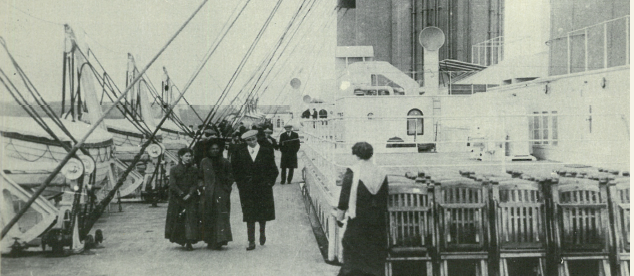
Even so, the children’s lives must not have been very entertaining as they were confined to the space of the ocean liner. They enjoyed long walks on the ship’s decks in the free time between the many meals, snacks or aperitifs that were placed on the schedule in order to fill the long hours of the voyage. Familiar with music from the private lessons they received at home, it is clear that they attended with interest the various concerts held on the Titanic.
Children in first class travelled with some of their toys, all of which were expensive and unaffordable for children in third class.
The girls always carried porcelain dolls, while the boys used tin toys or the then fashionable and expensive lead soldiers.
The Titanic for children in third class was a delight. They ate hot food several times a day, with sweets they were not used to.
It was also the easiest way to meet other children from different European countries or even from Turkey or China. Despite the language barrier, they made friends and played football with rag balls on the fore and aft decks.
The girls in third class played skipping rope and also with rag and wooden dolls, perhaps not as pretty as those of the girls in first class, but just as much fun.
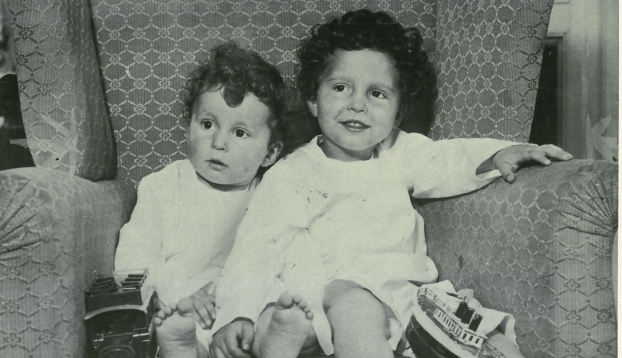
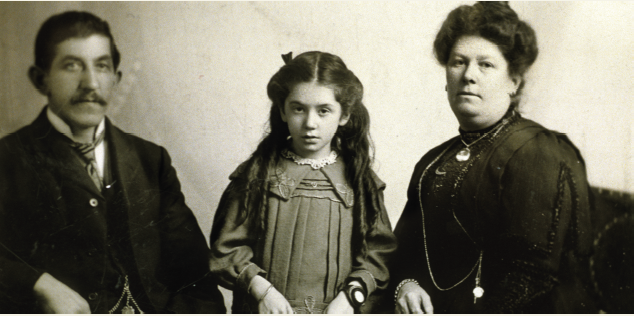
1st class
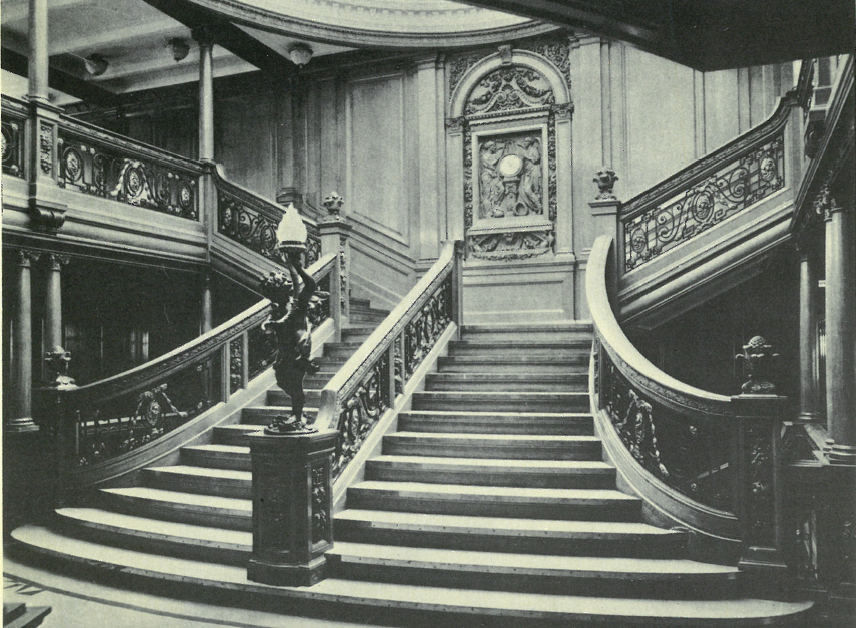
The famous Grand Staircase of the Titanic led down to the reception room located just before the First-Class À la Carte Restaurant.

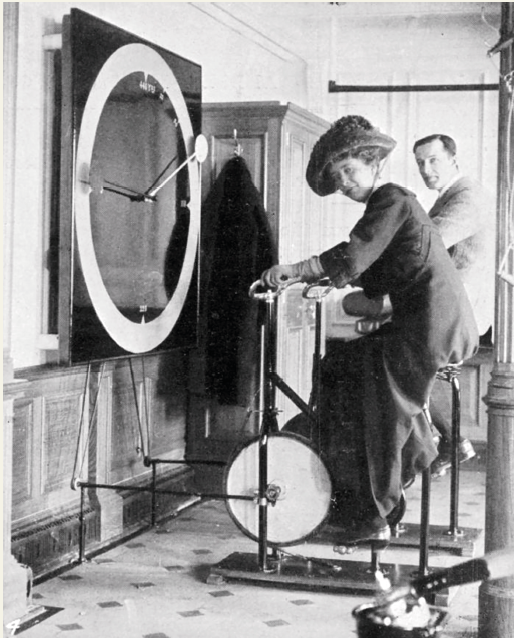
Passengers exercising. The Titanic’s gymnasium was one of the many luxuries and amenities that could be enjoyed on board the legendary ship.
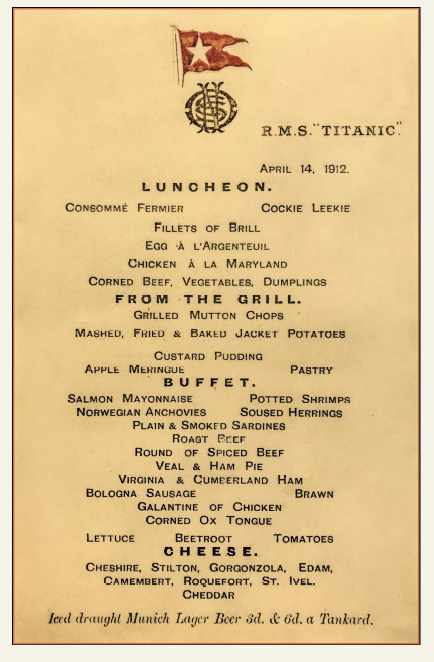
The menu that was served on the day of the tragedy. It was rescued by one of the passengers who managed to escape aboard one of the lifeboats.
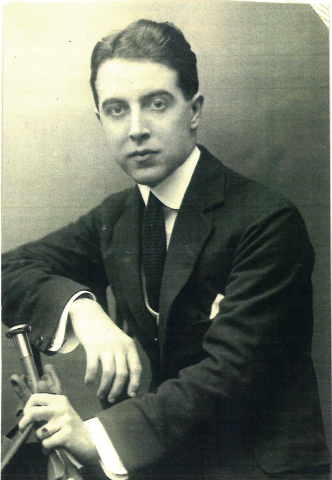
Víctor Peñasco y Castellana (24) and his wife María Josefa Pérez de Soto (22) boarded the Titanic on the night of 10 April 1912 at the French port of Cherbourg, travelling first class.
They had just been married and were enjoying their honeymoon. Pepita, as she was known among her friends, was travelling accompanied by Fermina Oliva, her maid.
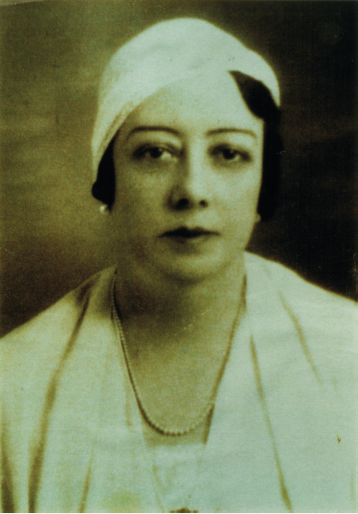
In Second Class, five Spaniards were travelling who miraculously survived the sinking. Julián Padró y Manent (26) was a hotelier from Barcelona who hoped to seek his fortune in Cuba, where he owned a transport company.
He was travelling with his fiancée, Florentina Durá y More (30), and her sister, Asunción (27).
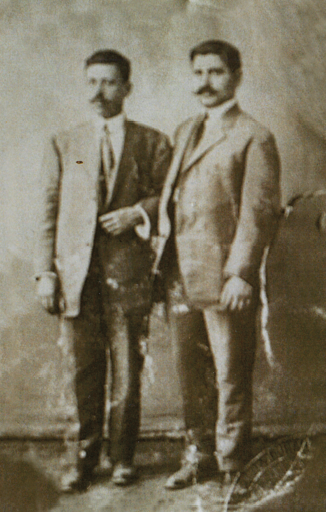
Encarnación Reynaldo (31), de Marbella, es dedicava al servei domèstic. Havia treballat a Anglaterra i parlava anglés.
Es va casar als Estats Units i no va tornar a Espanya mai.
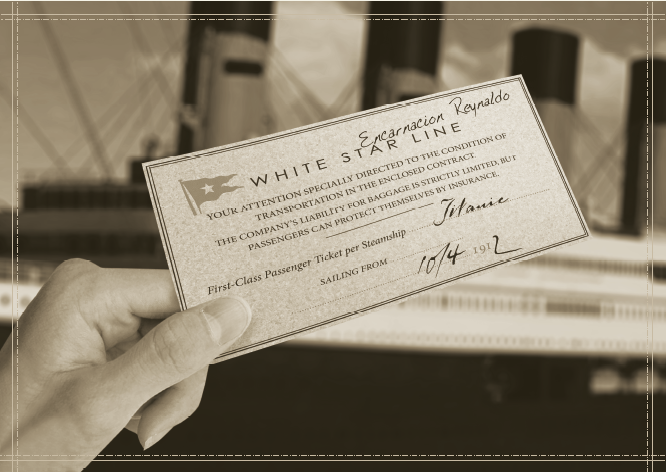
Servando Ovies Rodríguez (36) was born in Avilés (Asturias) and belonged to a local bourgeois family closely connected to business linked to Cuban emigration.
He boarded alone on a business trip in cabin D-43.
Servando was manager and partner of the company known as El Palacio de Cristal, located in Havana.
He had been in Europe purchasing merchandise and decided to return to Havana via New York, probably in order to load in Cherbourg the goods he had acquired in Paris. The photograph displayed in the showcase was taken in Paris a few days before he boarded the Titanic.
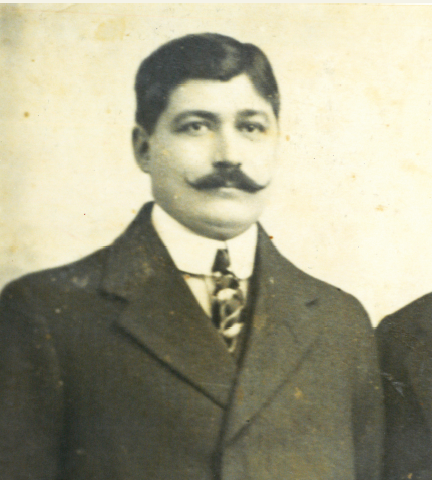
Emili Pallàs i Castelló (29), from Barcelona, was Padró’s partner in his hospitality businesses.
He was seriously injured in the shipwreck but returned safely to Spain.
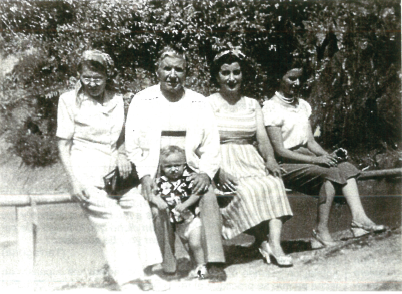
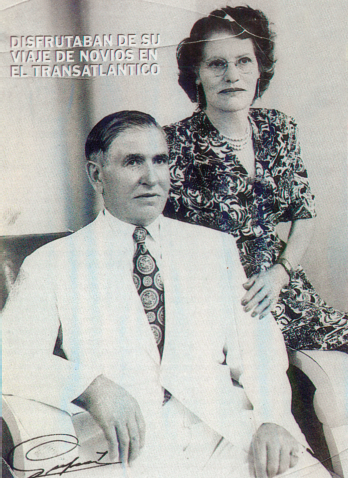
Juan Monrós Soler (20), a French national of Spanish origin (born in Barcelona), worked as a waiter in the First Class À la Carte Restaurant aboard the Titanic.
He lost his life in the sinking and never returned to Spain.
First-Class Silver Toast Rack from RMS Olympic Silverware 1911–1934
Private Collection Juan Cruz Ercoreca
Elkington & Co. was the company commissioned to create this silverware for first- and second-class service.
In first class, the “Reed and Star” design was used, referencing the White Star Line logo.
First-Class Milk Jug from RMS Olympic Silverware 1911–1934
Private Collection Juan Cruz Ercoreca This silver milk jug by Elkington & Co. was used during breakfast and tea in the dining saloon and reception room on D Deck, as well as in the lounge.
White Star Line Passenger List 1922
Private Collection Juan Cruz Ercoreca During the Edwardian period, transatlantic travel was not taken lightly. Each class had its own passenger list, which included all travelers, as well as valets and maids. </br It also listed the principal members of the crew and provided useful information about the passengers.
Commemorative Sterling Silver Spoon from RMS Homeric Silver 1913
Private Collection Juan Cruz Ercoreca Transatlantic travel was highly popular at the beginning of the 20th century, and a significant portion of the company’s revenue and publicity came from the onboard barber shop and the sale of souvenirs, such as silver spoons or small cups, flags, brochures, and postcards.
First-Class Cutlery by Elkington & Co. Silverware 1911–1934
Private Collection Juan Cruz Ercoreca Dining was taken very seriously during the Edwardian period and typically consisted of between four and ten courses, each served with its own specific piece of cutlery. • First-Class Fork • First-Class Dessert Fork • Sardine Fork • Oyster Fork • Teaspoon • Fruit Knife and Fork
First-Class Sugar Dispenser from RMS Olympic Silverware 1911–1934
Private Collection Juan Cruz Ercoreca This tall sugar dispenser by Elkington & Co. was used exclusively at breakfast in the D Deck dining saloon. Fresh fruit was included on the menu, and one dispenser was placed on each table.
Cecilia, Vol. V by Frances Burney – Belonging to Mrs. Eleanor Elkins Widener Circa 1782
Private Collection Juan Cruz Ercoreca The Wideners, Mrs. Eleanor Elkins Widener and Mr. George Widener, were returning from a European tour with their eldest son, Harry, who had recently graduated from Harvard. They belonged to one of the most prominent families in Philadelphia and resided at Lynnewood Hall in Elkins Park. Mr. Widener and his son Harry perished in the sinking of the RMS Titanic. Following the tragedy, Mrs. Widener commissioned the construction of the Harry Elkins Widener Memorial Library at Harvard University in memory of her son. In October 1915, she married Dr. Alexander Hamilton Rice, founder and director of the Harvard Institute for Geographical Exploration. This book belonged to “Miramar,” the Wideners’ summer residence in Newport.
First-Class Serving Platter by Stonier & Co. Porcelain 1911–1934
Private Collection Juan Cruz Ercoreca The White Star Line commissioned Stonier & Co. of Liverpool to produce its porcelain tableware. This design, known as Gothic Arch, was used in the D Deck dining saloon. Hand-painted and finished with gold trim, this piece exemplifies the attention to detail and luxury on board.
First-Class À La Carte Restaurant Serving Tray Silverware 1911–1934
Private Collection Juan Cruz Ercoreca This 1911 silver tray, manufactured by Goldsmiths & Silversmiths Company of 112 Regent Street, was used in the restaurant of the RMS Olympic, located on B Deck. The restaurant was not included in the ticket price and was highly popular among the wealthiest passengers.
First-Class Syrup Chocolate Pot Silverware 1911–1934
Private Collection Juan Cruz Ercoreca This silver piece by Elkington & Co. was used in first-class areas to serve coffee or chocolate after lunch in the reception room or the Café Veranda, and to serve syrup during breakfast in the main dining saloon.
First-Class Serving Dish Silverware 1911–1920
Private Collection Juan Cruz Ercoreca In the first-class dining saloon, each course had its own presentation and dedicated serving dish. This round dish by Elkington & Co., in the Reed and Star pattern, was used in the main dining saloon on D Deck.
First-Class “Wisteria” Dessert Plate Porcelain 1911–1934
Private Collection Juan Cruz Ercoreca One of the most iconic and recognizable pieces of the White Star Line. Manufactured by Stonier & Co. of Liverpool, it is known as Wisteria due to its decoration featuring sprays of wisteria flowers. Many of these plates were recovered from the wreck site, although the hand-painted details have long since faded due to the effects of the ocean.
White Star Line Wooden Hanger 1911–1934
Private Collection Juan Cruz Ercoreca La White Star Line cuidava cada detall, fins i tot els penjadors portaven el nom de la companyia naviliera. The White Star Line paid attention to every detail; even the hangers bore the company’s name. At the time, it was common to travel with a large amount of luggage, as each moment of the day required a different outfit. In first class, wealthy passengers often traveled with valets and maids who assisted them in maintaining their refined lifestyle.
First-Class Menu – RMS Carpathia 1910
Private Collection Juan Cruz Ercoreca
The RMS Carpathia was the ship that rescued the survivors of the RMS Titanic.
This menu relates to a first-class celebration in 1910 and includes the names of the guests printed on it. It was common for ships to have their own printing press, used for daily menus or small publications during the voyage.
Postcard of the SS Celtic Circa 1904
Private Collection Juan Cruz Ercoreca
Before the launch of the Titanic and the Olympic, the White Star Line operated a fleet of four ships known as the “Big Four.” The SS Celtic was one of them. This postcard, sent in 1904, offers a glimpse of life on board.
Villeroy & Boch Tile Ceramic 1911–1934
Private Collection Juan Cruz Ercoreca The ship’s common areas, such as bathrooms and crew spaces, were lined with ceramic tiles. The White Star Line commissioned Villeroy & Boch to produce several of its designed pieces. The German manufacturer, still globally recognized today, was founded in 1748 in Audun-le-Tiche and is currently headquartered in Mettlach, in the Saar region. Its craftsmanship and attention to detail made it an ideal partner for outfitting the luxurious ocean liners of the era.
Artwork by Ken Marschall, White Star Line, Titanic 1912 1997
Private Collection Juan Cruz Ercoreca Ken Marschall, born in 1950, is a renowned maritime artist celebrated for his meticulous and atmospheric paintings of historic ocean liners, particularly the RMS Titanic. His works masterfully combine artistic vision with historical accuracy, bringing to life the grandeur and tragedy of early 20th-century sea travel. Marschall’s paintings have become definitive visual representations of ships such as the Titanic, the Olympic, and the Lusitania. His expertise was sought for major film and documentary projects, including Titanic directed by James Cameron, where his art and knowledge played a key role in recreating the ship’s interiors and exteriors. Through his work, Marschall has shaped the way entire generations imagine maritime history. This numbered and signed print features a first-class chandelier, hand-drawn in pencil by Ken Marschall. On the right side appears the signature of Milvina Dean, a third-class passenger who was the youngest person on board the Titanic at just nine weeks old. She was also the last living survivor of the tragedy, passing away on 31 May 2009 at the age of 97.
Letter from RMS Canopic on White Star Line Stationery 1924
Private Collection Juan Cruz Ercoreca One of the common pastimes during an ocean voyage was catching up on correspondence. The ship’s lounges provided monogrammed stationery bearing the logo of the White Star Line, allowing passengers to write as many letters as they wished. This example from the RMS Canopic describes a severe storm encountered during the crossing.
First-Class Menu – SS Cedric Circa 1909
Private Collection Juan Cruz Ercoreca The SS Cedric, one of the “Big Four,” operated on the Liverpool–New York route and offered Mediterranean cruises during the winter season. Launched in 1902, this 21,000-ton vessel remained in service until 1931, when she was withdrawn and scrapped
Postcard “Hands Across the Seas” – SS Oceanic Silk 1899–1914
Private Collection Juan Cruz Ercoreca The SS Oceanic marked a turning point for the White Star Line, gaining recognition for her impressive size and luxurious design. Launched in 1899, she remained in service until 1914, when she ran aground on rocks near the Shetland Islands, Scotland. Many Titanic passengers had originally booked passage on the Oceanic and were transferred due to the coal strike that affected transatlantic transport at the time.
Signed Clipping of Edwina McKenzie, Second-Class Passenger 1982
Private Collection Juan Cruz Ercoreca Miss Edwina “Winnie” Troutt (27), later Mrs. McKenzie, born in July 1884 in Bath, was a second-class passenger traveling to visit an aunt in Massachusetts. Mrs. McKenzie passed away in 1984 at the age of 100.
First-Class Menu – SS Baltic June 1912
Private Collection Juan Cruz Ercoreca Launched in 1903, the SS Baltic was one of the “Big Four” operating on the Liverpool–New York route. During the Titanic disaster, the Baltic received the distress signal by telegraph but was too far away to reach the scene in time. This menu dates from just two months after the tragedy. The Baltic remained in service until 1934, when she was withdrawn and scrapped.
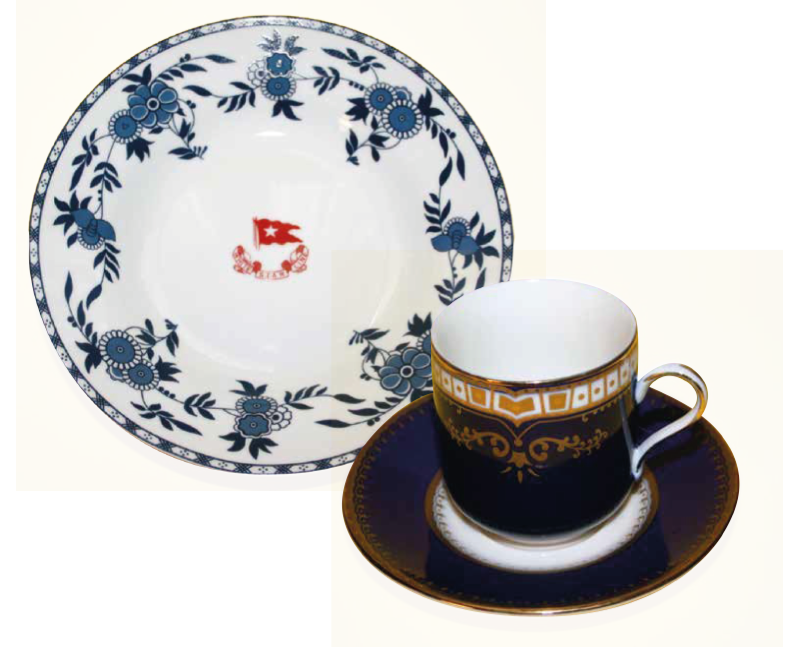
First-Class Monogrammed Demitasse Cup and Saucer Porcelain 1911–1934
Private Collection Juan Cruz Ercoreca This delicate 1911 coffee set is a rare example produced by Stonier & Co., featuring the White Star Line monogram instead of the more commonly used triangular burgee flag. Its refined design and distinctive visual identity highlight the attention to detail and exclusivity associated with first-class service aboard the company’s vessels.
A Journey in Other Worlds by John Jacob Astor IV First Edition, 1894
Private Collection Juan Cruz Ercoreca John Jacob Astor IV was the wealthiest man aboard the RMS Titanic and a member of the prominent Astor family of New York. His great-grandfather, Johann Jakob Astor, was born in 1763 in Waldorf, Germany, and emigrated to the United States in 1794. At the time of the voyage, Astor was returning home after an extended honeymoon in Paris and Egypt with his young second wife, Madeleine, aged 19, who was pregnant. They were accompanied by a valet, a maid, a nurse, and their Airedale Terrier named Kitty. Astor was also a soldier, writer, inventor, and sportsman. His body was later recovered and identified by the initials embroidered on his clothing and by his gold pocket watch.
Framed Plate and Cutlery Porcelain and Silverware 1996
Private Collection Juan Cruz Ercoreca Screen-used prop from Titanic. Many of the props used in the film were sold after production through a catalog issued by the J. Peterman Company. This plate and cutlery were used in the first-class dining scenes.
Plafó de llum de la gran escala Resina 1996
COL-LECIÓ PRIVADA JUAN CRUZ ERCORECA Utilitzat en la pel·lícula Titanic (1997). La base d’este llum es va utilitzar en el vestíbul de la gran escala de primera classe i també podia veure’s en les cabines de primera classe. La peça va ser modelada a partir d’un llum original del RMS Olympic, pertanyent a la col·lecció personal de l’artista marítim Ken Marschall.
Cabin B-54 Hanger 1996
Private Collection Juan Cruz Ercoreca Screen-used prop from Titanic. This wooden hanger is a perfect example of the attention to detail and extensive research carried out by the film’s art department. It can be seen several times in Cal Hockley’s wardrobe throughout the film.
Portable Travel Desk Oak, Bronze, and Leather 1880
Private Collection Juan Cruz Ercoreca In an era when the upper classes traveled for extended periods, staying organized and up to date with correspondence was essential. This portable desk is an example of the work of the Art Department of the 1996 film, which used real antiques to bring realism to the scenes. You can even see the calendar set to the day the Titanic sank. On this desk, Rose writes her farewell note to her fiancé after being sketched with the Heart of the Ocean.
Rose’s Dressing Set Silver and Tortoiseshell 1923
Private Collection Juan Cruz Ercoreca This 1923 dressing set from Birmingham, made of silver and tortoiseshell, can be seen on Rose’s vanity in scenes featuring both young 17-year-old Rose and the older Rose when she says, “The reflection has changed a little.” Its presence serves as a visual parallel between the passage of time and the fleeting nature of beauty, both of the character and the ship itself 84 years after the sinking. This Art Nouveau-style pewter floral vase can also be seen on Rose’s vanity
Framed Luggage Tags and Jack’s Third-Class Ticket 1996
COL-LECIÓ PRIVADA JUAN CRUZ ERCORECA Durant el rodatge només es va construir un costat del vaixell per a reduir costos de producció. Per a l’escena d’embarcament a Southampton, la imatge va ser invertida per a crear la il·lusió del costat oposat del vaixell.
Framed Cabin Number – Titanic Resin 1996
Screen-used prop from Titanic (1997). Each cabin door aboard the Titanic displayed an identifying number. These can be seen in Rose and Cal’s suite throughout the film. This example, E-70, corresponds to the same deck where Jack was later handcuffed during the sinking sequence.
Dining Table Porcelain, Glassware, and Silverware 1996
Private Collection Juan Cruz Ercoreca Screen-used prop from Titanic (1997). The Wisteria porcelain design was meticulously recreated by a Mexican company in Rosarito during production. Every detail was faithfully reproduced to match the original 1912 pieces. The glassware features the White Star Line burgee flag etched in acid, as if dining aboard the ship in 1912. The silverware (screen-accurate) follows the same design shown in the film, known as “Dubarry,” originally from London.
À la Carte Restaurant Silverware 1911–1934
Private Collection Juan Cruz Ercoreca The Titanic and the Olympic were the first ships in the world to feature an à la carte restaurant, a symbol of luxury and innovation. Unlike the main dining room, which offered set menus, this exclusive space provided a full menu for up to 141 diners, requiring extraordinary logistics and service. Located on Deck B, next to the Café Parisien, the restaurant was inspired by the Ritz hotels in London and Paris. Operated by the Italian restaurateur Luigi Gatti, it offered a more intimate and refined atmosphere for first-class passengers.
À la Carte Restaurant Porcelain Porcelain 1911–1934
Private Collection Juan Cruz Ercoreca Just as the Goldsmiths & Silversmiths Company was chosen to supply the silverware, Royal Crown Derby was commissioned to produce the porcelain for the White Star Line. They created this exclusive design inspired by the Louis XVI style specifically for use on board. In 2012, to mark the centenary of the sinking, Royal Crown Derby reissued the design in a limited production under the name “Titanic.” On the night of April 14, Mr. and Mrs. Widener hosted a dinner in honor of Captain Smith in the à la carte restaurant, making this the service used for what would become the Titanic’s last dinner.
Diana the Huntress, Artemis or Diana of Versailles – Ferdinand Barbedienne Bronze 1880
Private Collection Juan Cruz Ercoreca The fascination and symbolism of this pastoral figure from the ancient world. Discovered in Italy, between Nemi and Tivoli, in the late 1550s, the original sculpture was sent to France by Pope Paul IV and became a centerpiece at the Château de Fontainebleau and the Louvre Palace, until Louis XIV placed it in the newly completed Hall of Mirrors at Versailles, from which it takes its most recognized name. It remained there until 1798, when it returned to the Louvre, where it is still preserved today. The first-class lounges of the Olympic and Titanic were the heart of social life on board. Designed for multiple uses, they were inspired by the Palace of Versailles, with exquisite symmetry and a bronze copy of Artemis placed above the grand marble fireplaces as the centerpiece of each lounge. In 1986, Robert Ballard found the Diana statue lying face-up on the ocean floor, as if resting on the sand awaiting discovery. This bronze figure by Ferdinand Barbedienne witnessed the most distinguished gatherings on board, the brutality of the sinking and ship’s breaking, and over a century of perpetual darkness. Diana gazes proudly to the right, holding her quiver, ready for her next hunt.
VR
L’ÚLTIMA CANÇÓ DE L’ORQUESTRA
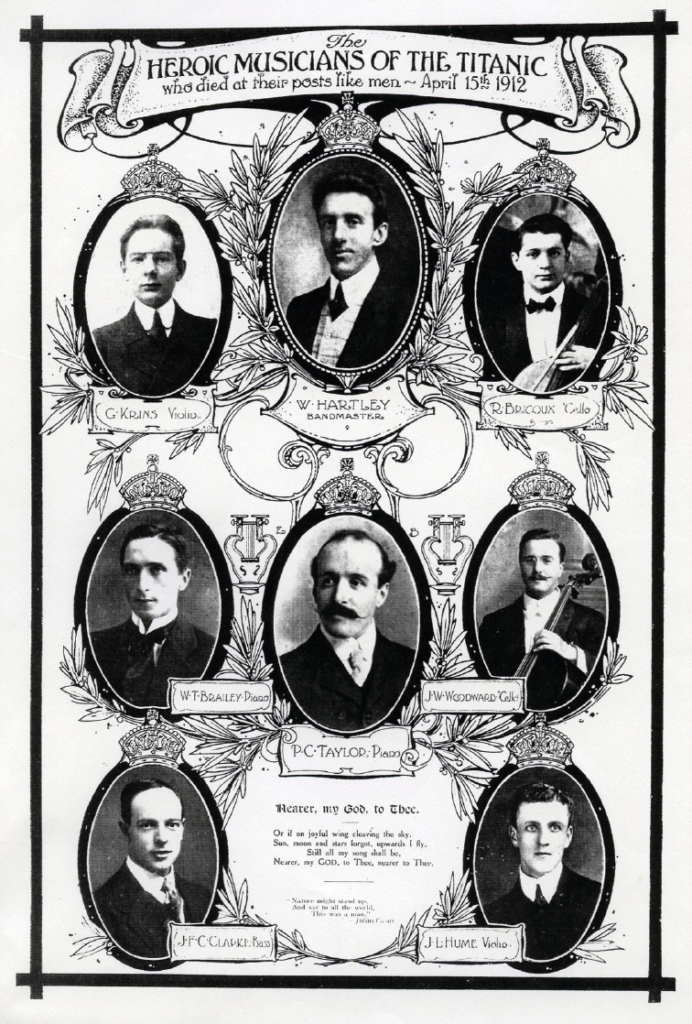
In this enchanting Virtual Reality experience, we pay homage to the musicians that were on board the Titanic.
The musicians boarded at Southampton and travelled on board the ship as second-class passengers.
Until the night of the sinking, the players performed as two separate groups. The first was a quintet consisting of Percy Taylor, John Woodward, Fred Clarke and John Hume, led by violinist and official bandleader Wallace Hartley. They played concerts at teatime, after dinner and during Sunday services.
For other occasions the violin, cello, and piano trio of Georges Krins, Roger Bricoux and Theodore Brailey played at the À La Carte Restaurant and the Café Parisien.
After the Titanic hit the iceberg and began to sink, Hartley and his fellow band members started playing music to help keep the passengers calm as the crew loaded the lifeboats. Many of the survivors said that Hartley and the band continued to play until the very last moment.
Reportedly, their final tune was the hymn, “Nearer, My God, to Thee”, although other sources suggest it was “Songe d’Automne” (also known simply as “Autumn”).
One second-class passenger said:
“Many brave things were done that night, but none were more brave than those done by men playing minute after minute as the ship settled quietly lower and lower in the sea. The music they played served alike as their own immortal requiem and their right to be recalled on the scrolls of undying fame.”
All of the musicians died in the sinking.
The Titanic’s musicians, who died heroically at their posts. These particularly inspiring characters have their own space in our exhibition, as does the music that was played on board.
Each note holds a piece of history
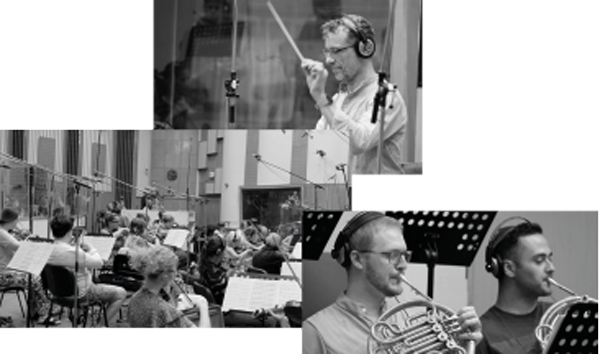
The music that accompanies you throughout the exhibition has been specially created by the Dutch composer René Merkelbach and his team.
The complete soundtrack has been recorded with the Budapest Art Orchesta, a symphonic orchestra of 50 musicians.
Each orchestral piece complements the narrative of the different rooms, immersing you in the grandeur of the Titanic in 1912.
For this virtual reality (VR) experience, René has created a new composition from the pieces the musicians were playing on the final day at sea. This digital musical journey will make you feel part of history, and through the combination of the immersive video and sound recreation, you will feel the emotions of the musicians and the passengers on that tragic night.
Relive the musical journey of The Legend of the Titanic, by scanning the QR-code.
Behind the scenes with the Budapest Art Orchestra

Immersive Room
05:30 Arthur (Narrating, with a tone of hope mixed with a hint of anxiety):
” The whole world is talking about the Titanic and so many people, each with their own hopes and dreams, are coming along with us. For me, it’s the promise of a fresh start in the United States (pauses, a smile crosses his face).
And who is the most excited of all? The one who hasn’t slept for days? My daughter, Elisabeth, of course. Soon, she’ll be reunited with her mother. We’re lucky, truly blessed, to be part of this voyage. Third class, yes…but it’s a step towards a better future. We finally saved enough to join my wife, Cassidy, in New York.”
05:47 Elisabeth (Bright-eyed, filled with anticipation):
“Papa says that in just a few days, I’ll see Mama again. At last. I’ve missed her so much. It’s been over a year since she left for New York for her treatment. She’s been waiting for us to be together again. I can’t wait…”
08:01 (Arthur murmuring as he reads the newspaper; Elisabeth looks around restlessly):
Elisabeth (mischievously, whispering to herself): “I’ve been stuck in here for hours… it’s so boring. There must be more exciting places on this ship… (glances at her father, who is engrossed in his paper) Hmmm… Papa’s distracted… Perfect timing…”
(She sneaks out quietly. Arthur looks up and suddenly realizes Elisabeth is gone.)
08:48 Arthur (sighs with a mix of frustration and amusement):
“Elisabeth? Where are you? Not again… Always off exploring, that little adventurer.”
09:14 Arthur (with growing concern):
“Where could that little rascal be now? Surely she wouldn’t have wandered into the second-class corridor… or would she?”
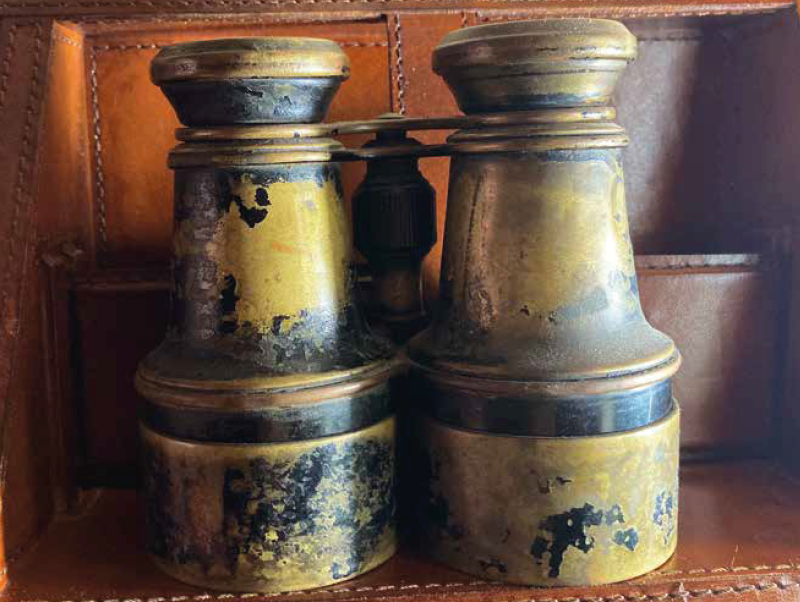
09:28 Elisabeth (wide-eyed as she spots binoculars):
“Wow, binoculars! Everything looks so big through these!”
10:08 Arthur (nervously, as he moves through the ship):
“We’re definitely not allowed to wander around these parts. If the captain catches us… This is the second-class veranda. We’ll be noticed for sure!”
10:26 Elisabeth (smiling, politely greets people as she walks):
“Good afternoon!” (She strolls a bit further and gasps in delight) “Oh, what a lovely courtyard, with so many plants!”
10:46 Elisabeth (wrinkling her nose in disgust):
“Ugh, I don’t like this place. It’s the smoking room.”
10:54 Elisabeth (sneezes loudly):
“Aaaachhiss!”
11:02 Elisabeth (coughs, looks uncomfortable):
“It’s too smoky in here. I’m leaving.”
11:30 Arthur (alarmed, hurrying):
“Oh no… That’s the first-class area. If she wanders in there… she’s in for a real scolding.”
12:27 Arthur (relieved, finding Elisabeth):
“Thank goodness I’ve found you! Where have you been? I’ve been searching the entire ship! You had me worried sick!”
Elisabeth (with genuine remorse, then excitement):
“I’m sorry, Papa… (her tone shifts as she lights up) But this ship is amazing! Every room is more beautiful than the last. I could explore here for days! You should come see too!”
(Arthur chuckles, amused by her innocence and curiosity.)
ON THE GRAND STAIRCASE AS THE SHIP BEGINS TO SINK:
Arthur (urgently, with fear in his voice):
“Quick, grab my hand! Don’t let go, no matter what!”
Elisabeth (trembling, voice quivering):
“Papa, I’m scared!”
21:44 Arthur (trying to remain calm, reassuring her):
“Don’t worry, darling. The Carpathia is on its way to pick us up.”
Elisabeth (hopeful but uncertain):
“Will it take us to New York… to Mama?”
Arthur (nodding, forcing a smile):
“Yes, yes, we’ll see her soon. Don’t worry… everything will be alright.”
Elisabeth (glancing around, concerned):
“And… what about the others? It’s so cold… and there don’t seem to be enough lifeboats for everyone…”
Arthur (pausing, his voice falters slightly as he tries to comfort her):
“Don’t worry, sweetheart… (hesitates) They… they’ll find a way. I’m sure of it… (knows he is trying to believe his own words).”
22:14 Arthur (reflectively, with a somber tone):
“We were so fortunate… To be together in New York at last. But not everyone was as lucky. It didn’t matter if you were first class, second, or third… In the end, we were all just passengers on the Titanic.”
Iceberg and lifeboat
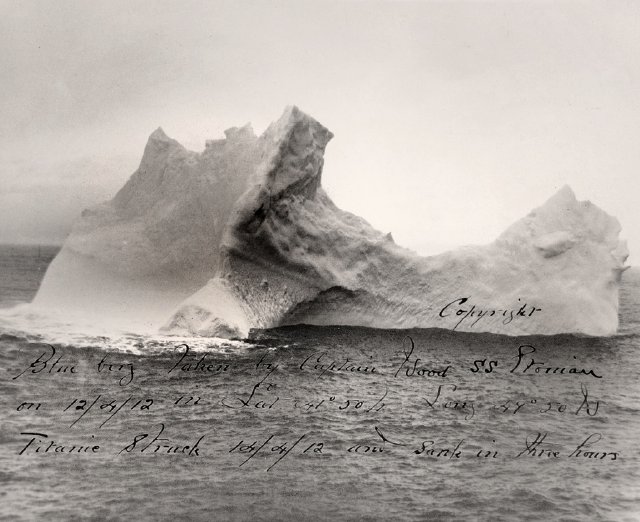
Iceberg ahead
FROM A NAUTICAL POINT OF VIEW, MURDOCH’S PERFORMANCE WAS IMPECCABLE
The iceberg was reportedly sighted at about 700m:
Given the poor visibility on the night of 14-15 April 1912, this seems unlikely. It was probably seen much later. The first two people to see it were the two lookouts.
Whether they had binoculars or not, having them would not have solved anything as there was no moon and visibility was very poor.
Once the iceberg was sighted, they rang the lookout bell.
Next, they telephoned the bridge, where First Officer William McMaster Murdoch gave three orders: Hard a-starboard / Full speed astern / Close watertight doors.
From a technical nautical point of view, Murdoch’s performance was impeccable.
Assuming the speed of the Titanic was 20 knots (37 km/h) and assuming that the iceberg was sighted at about 700 m, approximately 1 minute and 7 seconds must have elapsed before the collision:
0 to 5 seconds: The iceberg is sighted and identified.
5 to 10 seconds: The bridge is informed.
10-15 seconds: The above-mentioned orders are given.
15-20 seconds: The order is received in the engine room for full speed astern and the reversing manoeuvre begins.
The Parsons turbine needs to be stopped and the side reciprocating engines need to be reversed.
15 seconds-1 minute 7 seconds: The Titanic begins to fall to port very slowly at first and somewhat more quickly at the end. Witnesses (helmsman and lookouts) testified at the inquiry that the ship listed to port by about two points (22.5 degrees).
1 minute 7 seconds after sighting: The collision occurs.
In conclusion, and in view of all these facts, no manoeuvre would have been useful in these circumstances. The only effective thing would be if the ship had sailed at a slower speed.
Escriptori de Thomas Andrews — cabina A-16 1996
COL-LECIÓ PRIVADA JUAN CRUZ ERCORECA Utilitzat en la pel·lícula Titanic (1997), escena de l’iceberg. Thomas Andrews, constructor del Titanic, va ser interpretat amb gran profunditat per l’actor Victor Garber.
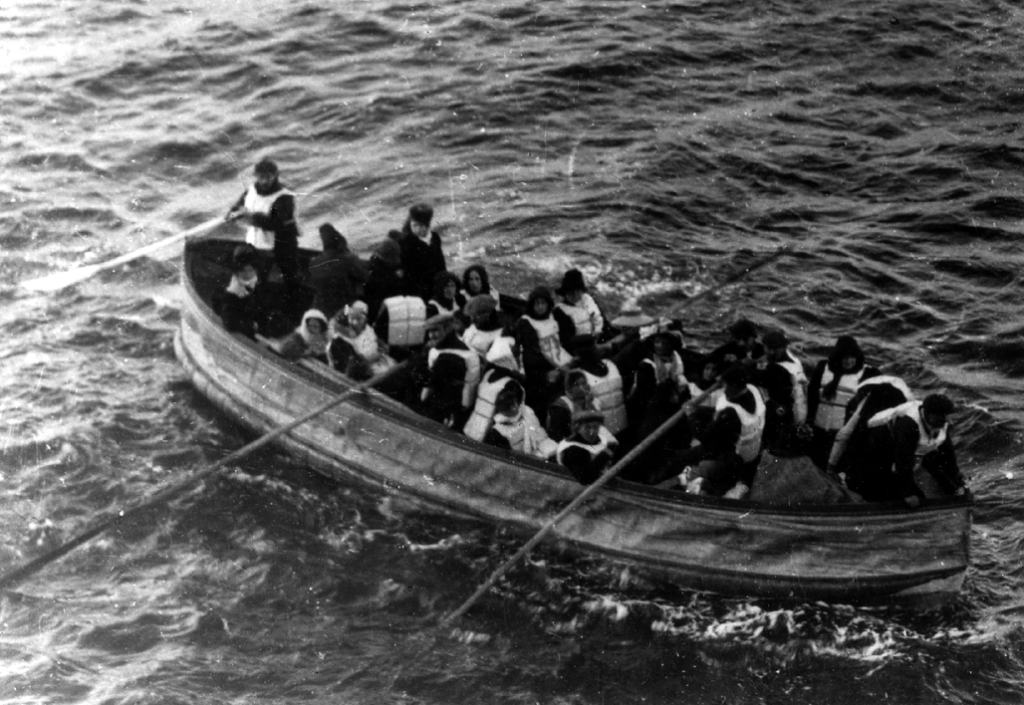
Armilla salvavides 1996
COL-LECIÓ PRIVADA JUAN CRUZ ERCORECA Atrezzo utilitzat en la pel·lícula Titanic (1997). Es van recrear centenars d’armilles salvavides per als extres en les escenes de l’enfonsament. Titanic és considerada una de les últimes grans produccions de Hollywood realitzades a gran escala, destacada pel seu compromís amb la precisió històrica.
Photobooth
Bow photocall
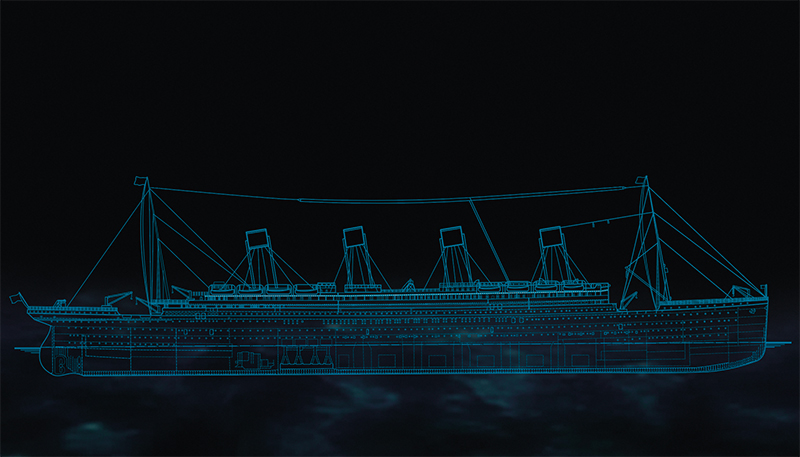
LES DIMENSIONS DEL TITANIC
FINS I TOT HUI EN DIA LES DIMENSIONS DEL TITANIC CONTINUEN SENT IMPRESSIONANTS
- Overall length: 882 feet / 269 metres
- Length between perpendiculars: 850 feet / 259 metres
- Beam: 92 feet / 28 metres
- Height to boat deck: 64 feet / 19.5 metres
Interactive table tops
SKETCH & POST
THE TITANIC AFTER APRIL 15
UNA HISTÒRIA DE DISCRIMINACIÓ
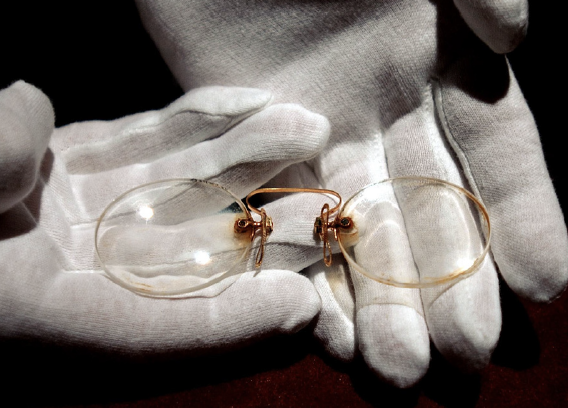
Although the wreck of the Titanic was discovered by oceanographer Robert Ballard in 1985 at a depth of 3,800 metres in the North Atlantic, only hours after its sinking thousands of objects and the bodies of many victims of the disaster surfaced.
Testimonies from some of the vessels that approached the rescue area — or later passed through it — are chilling. On Monday, April 15, 1912, the steamship Californian reported: “We saw several empty lifeboats, floating planks, deck chairs and life jackets.” Two days later, on Wednesday the 17th, with more information already known about the tragedy, the steamship Prinzess Irene issued a rescue notice stating: “Intercepted message from an unidentified steamer claiming that an iceberg had been sighted 50 miles (92 km) from the sinking site, with more than a dozen men wearing life jackets gathered upon it.”
As the days passed, hopes of finding survivors in the icy ocean waters faded. Thus, on Saturday, April 20, the steamship Bremen reported: “We sighted wreckage and corpses.”
The debris began spreading across the North Atlantic, carried by the currents. On Monday the 22nd, one week after the disaster, the steamship Cestrian reported observing across a wide area: “Deck fittings, bedding, life preservers and chairs.”
Nearly two weeks later, on Friday, May 3, the steamship Minia observed: “Fragments of the First-Class Grand Staircase; most of the wreckage appears to come from below-deck areas. A terrible explosion must have occurred, and parts of the deck panelling appear shattered into small pieces.”
Not even all those fortunate enough to secure places in lifeboats survived. Almost a month later, on Monday, May 13, the steamship Oceanic reported discovering a “lifeboat containing three bodies at 47°01′N and 42°29′W.” Debris continued to appear. In December 1913, eighteen months after the sinking, the steamship Port Kingston of Elder recovered a collapsible lifeboat in Bermuda nearly 2,000 nautical miles (about 3,700 km) from the sinking site.
FACTS, DISCOVERIES AND DATA THAT MAKE THE LEGEND OF THE TITANIC A PARTICULARLY UNIQUE EPISODE
1
The remains of the Titanic lie at nearly four kilometres deep on the floor of the North Atlantic.
2
The remains of the Titanic are being consumed by bacteria known as Halomonas titanicae, which cause the entire surface of the wreck to become covered with stalactite-like formations, or “rusticles,” made of metal digested by these bacteria.
3
L’acció d’estos bacteris provocarà la desintegració de les restes del Titanic en els pròxims vint-i-cinc anys.
4
The action of these bacteria will cause the remains of the Titanic to disintegrate within the next twenty-five years.
5
The remains of the Titanic are divided into several sections separated by hundreds of metres.
6
The interiors of the Titanic’s wreck are in much better condition than the exterior of the ship. In some cabins, beds, clocks and other decorative objects can still be seen.
7
The damage caused by the iceberg cannot be seen on the remains of the Titanic because it is buried in the mud on the seabed.
8
The workers at the shipyards who built the Titanic earned an average wage of two pounds per week. They worked five days a week, from 7:50 a.m. to 5:30 p.m., plus a half day on Saturdays.
9
Among the passengers was a murderer — a stoker who had previously been imprisoned for the murder of his wife.
10
The stern section of the wreck imploded after being crushed by pressure, as it did not completely fill with water during the sinking. This is why its state of preservation is much worse than that of the bow.
11
The United States has prohibited the commercial sale of objects recovered from the Titanic.
12
The two luxury suites on board had their own private promenade deck measuring fifteen metres. Each suite consisted of five rooms: two bedrooms, two dressing rooms and one bathroom.
13
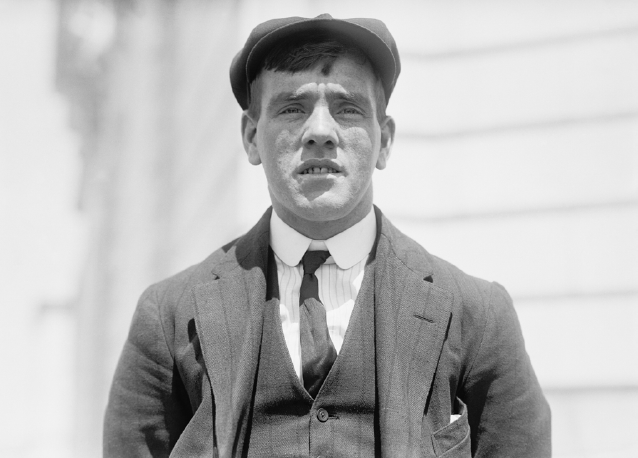
One minute and seven seconds passed between lookout Frederick Fleet’s warning and the collision with the iceberg.
14
The remains of the Titanic are protected by UNESCO, the United Nations Educational, Scientific and Cultural Organization.
CORRIDOR
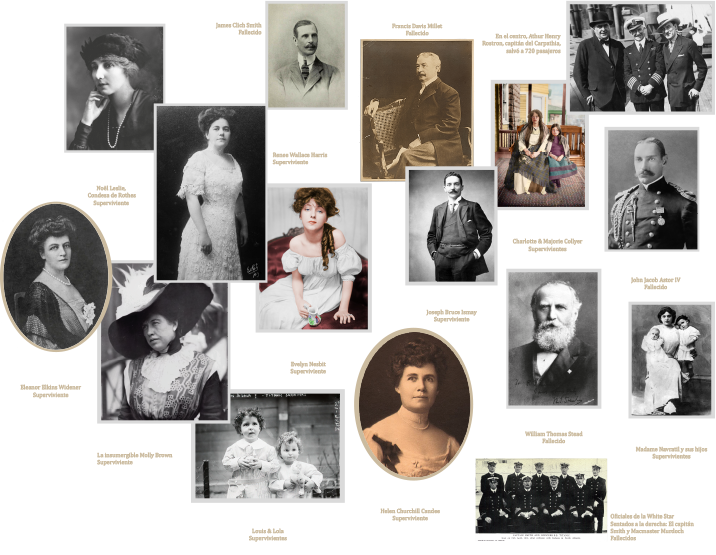
IN MEMORIAM
In honour of those who sailed aboard, andin memory of those who were lost to the sea.
The exhibition curators have made a great effort to ensure that the following list of passengers is as accurate as possible; however, some differences may exist due to errors or inconsistencies in historical records.
DEAD AND SURVIVORS
UNA HISTÒRIA DE DISCRIMINACIÓ
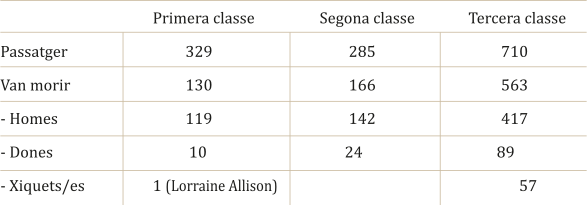
After that tragedy on the night of April 14–15, 1912, the press continued to report on the Titanic for months. Public opinion was already well aware of the marvels of her sister ship, the Olympic, which had been in service for a year, and the Titanic was said to surpass it in many respects, despite the two ships being practically identical. The great expectations and the myth of the ship’s unsinkability collapsed in the face of the horrifying death toll, recorded in the conclusions of the investigation conducted by the United States Senate: of the 2,223 passengers and crew on board, 1,517 lost their lives.
The figures speak for themselves: of the 899 crew members, 685 perished.
As for the passengers, the numbers were even more dramatic and reveal the extent of the discrimination (whether deliberate or not) suffered by third-class passengers:
Iceberg ahead
FROM A NAUTICAL POINT OF VIEW, MURDOCH’S PERFORMANCE WAS IMPECCABLE
The iceberg was reportedly sighted at about 700m:
Given the poor visibility on the night of 14-15 April 1912, this seems unlikely. It was probably seen much later. The first two people to see it were the two lookouts.
Whether they had binoculars or not, having them would not have solved anything as there was no moon and visibility was very poor.
Once the iceberg was sighted, they rang the lookout bell.
Next, they telephoned the bridge, where First Officer William McMaster Murdoch gave three orders: Hard a-starboard / Full speed astern / Close watertight doors.
From a technical nautical point of view, Murdoch’s performance was impeccable.
Assuming the speed of the Titanic was 20 knots (37 km/h) and assuming that the iceberg was sighted at about 700 m, approximately 1 minute and 7 seconds must have elapsed before the collision:
0 to 5 seconds: The iceberg is sighted and identified.
5 to 10 seconds: The bridge is informed.
10-15 seconds: The above-mentioned orders are given.
15-20 seconds: The order is received in the engine room for full speed astern and the reversing manoeuvre begins.
The Parsons turbine needs to be stopped and the side reciprocating engines need to be reversed.
15 seconds-1 minute 7 seconds: The Titanic begins to fall to port very slowly at first and somewhat more quickly at the end. Witnesses (helmsman and lookouts) testified at the inquiry that the ship listed to port by about two points (22.5 degrees).
1 minute 7 seconds after sighting: The collision occurs.
In conclusion, and in view of all these facts, no manoeuvre would have been useful in these circumstances. The only effective thing would be if the ship had sailed at a slower speed.
THE SINKING
In the first ten minutes after the collision, the damage seemed to have affected only the first six watertight compartments. The reality, however, was very different. At the end of these ten minutes the water had reached a level of at least 14 feet (just over 4 m) in the first five watertight compartments.
The water level gradually rose, slowly spreading through the ship.
Shortly after midnight, the flooded spaces in the Titanic near the point of collision with the iceberg were already substantial. Soon the stokers’ cabins, the sailors’ cabins, as well as the third-class cabins and several of the decks were affected by the water. There was no water penetration in the rest of the ship. All watertight doors aft of the damaged compartments were opened.
THE TITANIC BREAKS IN TWO
The Titanic’s bow continued to sink until the ship reached an inclination of between 29 and 45 degrees. The ship was sticking out of the water by the second funnel. All the lights were on. When the ship reached this position, the engine room area was out of the water. Due to the weight of the machinery and the fact that above it there was a line of structural weakness because it was much less compartmentalised, all the shear forces and bending moments were concentrated in this area.
Eventually, the ship broke in two, with the stern section remaining afloat and the bow section sinking rapidly.The small stern section turned 180 degrees in the water and sank maintaining a 90-degree angle. It was 2:20 in the morning.
The original plan was to equip the Titanic with 64 lifeboats. But in order to allow more space for passengers on deck, that number was reduced first to 32 and later to 20.
Myths and legends of the Titanic
IS IT TRUE THAT THE SINKING OF THE TITANIC WAS PREDICTED? WAS THE TITANIC THE TARGET OF AN EGYPTIAN MUMMY´S CURSE?
There are many myths and legends about the Titanic and its sinking. They all have an undercurrent of truth, which makes them, at the very least, unsettling legends.
Is it true that the sinking of the Titanic was predicted?
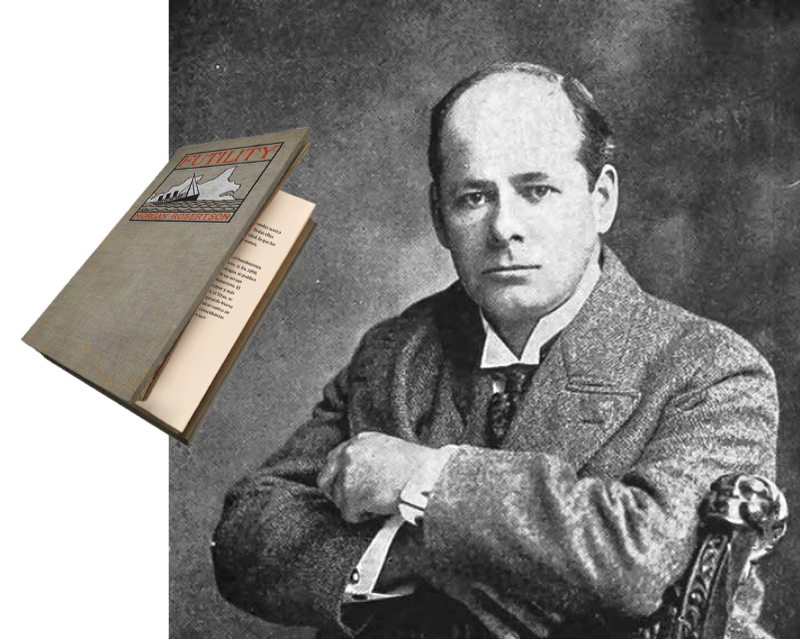
The answer is yes. In 1898, almost fifteen years before the sinking, the novel Futility, by an obscure author named Morgan Robertson, was published. The book told how the world’s largest and most luxurious ocean liner, the Titan, sank on its maiden voyage from New York to Liverpool after hitting an iceberg. The amount of similarities between the two stories is uncanny.
Was the Titanic the target of an Egyptian mummy’s curse?
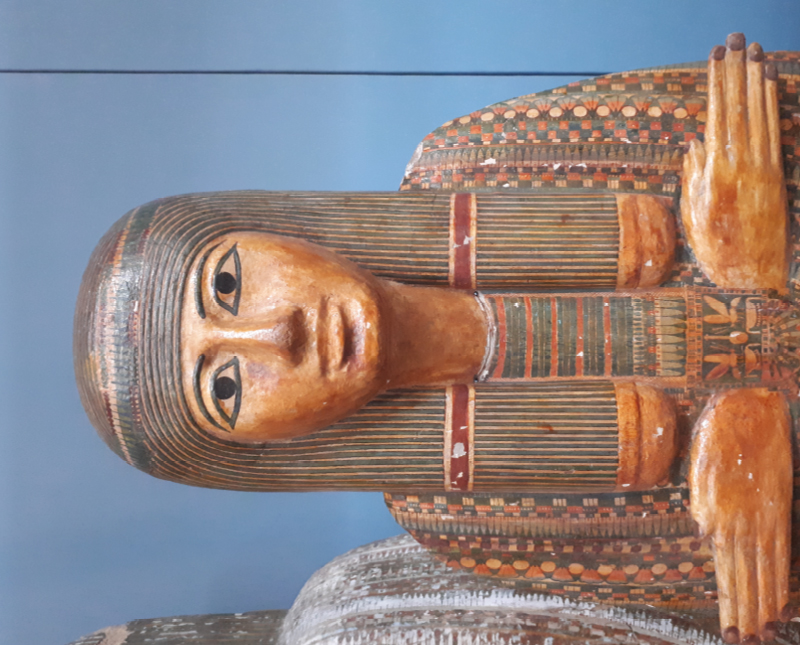
This story arose from the imagination of W.T. Stead,an editor and journalist with a keen interest in the occult who travelled first class on the Titanic. On one of the evenings of the voyage, he told his table companions, pulling their leg, that an Egyptian mummy said to have evil powers had been taken on board the ship. One of the attendees of that evening survived the disaster and told reporters that the Titanic had fallen victim to the mummy’s curse.
The story became an urban legend, but it has a basis in reality. A coffin lid(not of a mummy) was meant to be sent to New York from the British Museum (EA 22542). It can be seen today on the first floor. But it never actually left London.
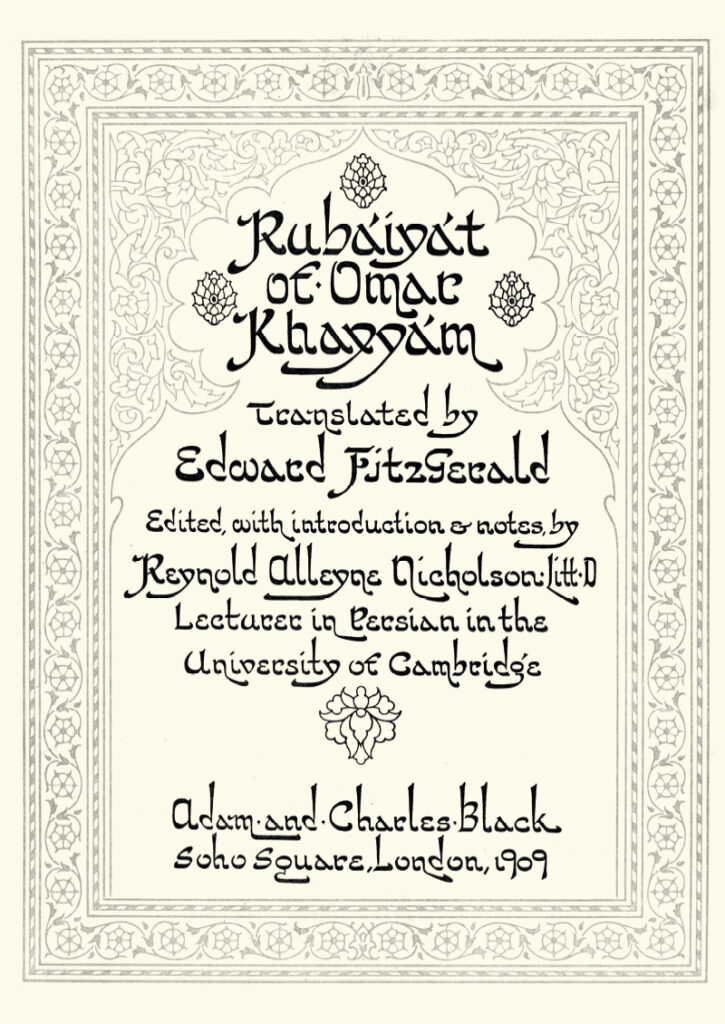
Was there any treasure on board the Titanic? Not in the classic sense of the concept of treasure. The two most valuable objects on board the Titanic were a painting by the French painter Blondel entitled La Circassiene au Bain, for which $100,000 was claimed, a veritable fortune, and the other object was a bejewelled collection of poems by the Persian poet Omar Kayam. The title of the book was Rubaiyat.
Interestingly, it is the artefacts recovered from the wreckage that have become real treasures. Not so long ago, a coffee cup fetched $30,000.
METAVERS
METAVERS
Do not attempt to walk through walls. The red light warns of the proximity of a real obstacle.
Do not run or jump during the experience.
Do not push other visitors.
Keep your belongings with you at all times.
Children under 12 years of age must be accompanied by an adult during the experience.
Raise your hand so our staff can assist you if you experience any of the following situations:
If you feel dizziness or vertigo.
If you feel uncomfortable or disoriented.
If your screen turns black.
If you experience any other technical issue.
IMPORTANT: Do not handle the VR headset yourself. Our staff will assist you in placing and removing it.
METAVERS
INTRO
We are in the north of the Atlantic, more than 600 kilometres southeast of the
island of Newfoundland in Canada. We have to descend to almost 3,820 metres,
the exact spot where the wreckage of the Titanic was found on 1 September
1985.
It is a place that humans cannot reach. A place where the darkness is absolute
and the water pressure is extraordinarily limiting to any form of life.
If the equipment were to fail, which I guarantee it will not, the implosion of the
submarine due to the water pressure would cause the whole thing to disintegrate
in less than 30 milliseconds. This is what unfortunately happened to the
exploration group that perished in 2023.
What’s going on? It looks as if we are plunging into a
mysterious black hole in the vastness of the ocean. Can it be true? It looks like magic!
English SCRIPT
- FIRST CLASS RECEPTION
Father: Son, do you see that clock there on the staircase landing?
Son: Yes, Dad, what is it?
Father: It is the Honour and Glory crowning Time.
(The boy is silent for a few moments, looking as if he is thinking)
Son: I don’t understand, Dad.
(The father laughs a condescending laugh and puts his hand on his son’s shoulder before
explaining).
Father: Honour and Glory are an allegory for the Titanic itself – we’re on the most modern ship in the world! Have you seen how big it is, and how majestic!? It’s also one of the fastest. A great adventure lies ahead of us son.
- CAFÉ PARISIEN
The atmosphere is quite rowdy. Laughter is heard from different parts of the room. The protagonists are two young Americans returning to their homeland, the United States. They are standing at the bar drinking a mug of beer.
Young man 1: It seems like we haven’t left London. We can have all kinds of luxuries. It’s a lot more than I expected.
Young man 2: It even exceeds many hotels we’ve stayed in in England.
Young man 1: One of the waiters told me that they have a full orchestra playing music.
Young man 2: Really? Ask them to play Edward Meeker’s ‘Take me out to the Ball Game’.
Young man 1: You’re homesick for America, aren’t you (and he laughs)?
- THE READING ROOM
We have two young women sitting opposite each other on a sofa. In the middle is a low table with several fashion magazines. One is Mrs. Marjorie Anne Newell (23 years old). And her companion Mrs. Jane Anne Hoyt (31 years old).
Marjorie: Jane, do you know that Lady Duff Gordon has been seen boarding at Cherbourg?
Marjorie says, lowering her voice so that no one hears the gossip.
Jane: But what are you telling me Marjorie! Lucile is one of my favourite designers. I have several of her latest outfits in my suitcase. Do you know if she came alone?
[Jane puts her hand to her mouth in excitement.]
Marjorie: She is accompanied by her husband, Sir Cosmo Duff Gordon. I don’t understand how she could have ended up with him.
[Marjorie points with an indignant face.]
Jane: She is a very polite and very stylish woman. She deserves to better. He’s just a simple soul with a lot of money.
The two laugh at Jane’s witticism while Marjorie gives her companion a slight slap, causing her to
rebuke her comment.
- DECK
Relaxed atmosphere on the decks. Sound of the sea. Shouts of children running, footsteps on the deck planking, etc. The protagonists are a young married couple. Víctor Peñasco y Castellana, 24, and his wife María Josefa Pérez de Soto, 22. They are walking along the deck or leaning on the railing overlooking the sea.
Victor: This trip seems to be the culmination of our honeymoon.
Pepita: Well, we still have to go back to Madrid.
Victor: You really want to go back after seeing what beautiful chances lie ahead of us?
Pepita: I would miss my parents too much.
Victor: We can tell them to follow us to New York on the next boat that sets sail.
Pepita doesn’t answer. She clings to her husband’s spleen and gazes out to sea, enjoying the scenery.
- MARCONI ROOM
Mr Jacques Heath Futrelle (37 years old) approaches the telegraph counter with a piece of paper in his hand to send a message.
Gentleman: Send this message immediately…: “Prepare my Pullman limousine for when the Titanic arrives in New York”.
Telegraphist: Certainly, Mr. Futrelle. It will be a pleasure to serve you… “Prepare my Pullman Li….auch!!!”
The boy can’t finish his sentence and lets out a groan of pain as he throws his hands to his head and pulls the headphones away from his ears.
Gentleman: Is something wrong, young man?
Telegraphist: Don’t worry, Mr Futrelle. It’s just a little electric shock. We are used to it. From time to time these devilish devices seem to get angry with us… I’m sending it right away.
[And resumes work]
- FIRST CLASS CABIN
We have Ellen Bird (31 years old) who is the maid of Miss Rosalie Ida Straus (63 years old). Ellen is looking after her mistress for dinner.
Mrs Straus: We have an important dinner tonight Ellen. Isidor has told me that he wants to impress his colleagues.
Ellen: Then Mrs Straus, I have no doubt: The red silk dress with the turquoise bows is a safe bet.
[Mrs. Straus giggles.]
Mrs. Straus: Who am I going to surprise at my age..Isn’t that the one I wore several weeks ago to the charity event at the Paris’ Opera?
Ellen: Take my advice, Mrs Straus. No one on board of the Titanic today was there that night. It will amaze everyone. Truly!
[Mrs. Straus pauses to think, and after a sigh replies:]
Mrs Straus: You’re right, as usual, Ellen. Although…
Ellen: Come on, don’t doubt, madam,” says the maid, cutting her off. “You’ll be getting a standing ovation”.
[Mrs. Strauss laughs again, flattered.
- THIRD CLASS
Loud and boisterous atmosphere. Voices in several languages shouting and laughing unabashedly. We focus on two children of about 8 and 10 years old. Only one of them speaks to his mother who is sitting between them. The 10-year-old mainly speaks. The 8-year-old just shouts a few words.
Mother: You’re not hungry again, are you? You’ve just had your snack.
Boy: I can’t stop thinking about dessert for dinner tonight.
Mother: What do you feel like eating?
Boy: I don’t care, Mum. Anything sweet!
[Mother laughs and hugs her children warmly.]
Mother: Then let’s be generous and fantasize. Dream of a buffet full of deserts. Like they have upstairs in first class….
Both children in unison: Yes, Mummy!
Boy: If I close my eyes, I can already taste it.
- ENGINE ROOM
The noise must be deafening (within limits, of course). The drivers’ faces are twisted by the excessive noise. One of the two men approaches his colleague’s ear. They are shouting.
Driver 1: What time does your shift end?
Driver 2: I can’t hear you? -says the man, stopping his work for a moment to listen to his colleague.
Driver 1: What time does your shift finish?
Driver 2: Still can’t hear a word!
Driver 1: WHAT?? TIME! YOU FINISH?!?
Driver 2: Ah… I think I still have a couple of hours left! I JUST DID 10 untill now….
Driver 1: Well, then I’m going to my bunk to rest. I’ll catch you later in the canteen.
Driver 2 just nods and raises his hand in farewell.
END Captain Smith
Captain: Isn’t it a beautiful picture?
I’m sure you’d like to take this opportunity too, wouldn’t you?
If you walk this way, you’ll find the EXIT. Can you see it?
There you can take off your glasses and you can take your very own photo in the
End Brian
next room!
INTERACTIVE ELEMENTS:
Menu
First-class passengers could dine in multiple dining rooms and were served delicious,
fine food off silver platters every night. Each course had its own wine pairings and the
Titanic even had a smoking room with spirits and cigars for men to retire to after a
fulfilling dinner, whilst the women could enjoy a coffee in the lounge. The dress code was
full on evening, with men wearing black tailcoats and trousers, white shirts with high
collars, waistcoats and bow ties. The women wore elaborate gowns in a range of colours,
patterns and fabrics. The dining ambience was also elevated with the tunes of a five-
piece orchestra for the ultimate experience. Such passengers’ backgrounds ranged from
upper-middle classes all the way to the top of society.
A menu from the last first-class lunch served aboard the RMS Titanic sold for $88,000 at
a Sept. 30th online auction. The menu exceeded the auction house’s expectations by
selling for $18,000 more than the maximum price of $70,000.
First Class Bedside Letter
The Titanic offered the finest and most luxurious First Class accommodations to
be found on any contemporary ocean liner. The cheapest first class fare could be
had for twentythree British pounds sterling, which is equivalent to around two
thousand eight hundred pounds today, without meals.
The most expensive suite would have cost around eight hundred seventy
pounds, which would be around one hundred and five thousand pounds today,
but that wasn’t occupied. The most expensive ticket purchased was believed to
have cost around five hundred and twelve pounds, so approximately sixty two
thousand pounds today.
Third Class Interactable Map
In the Third Class, also known as Steerage, was the working class, made up
mostly of immigrants on their way to a new life in America. Most of the third class
cabins were located on the F-Deck, with a few on the forward G-Deck. They
were noticeably less comfortable and spacious than their first and second class
counterparts, which were located in higher decks. When the ship hit the iceberg,
the forward steerage cabins on G-Deck began to flood just twenty five minutes
after impact.